Navigating Your Driveway Repair Journey
Your driveway is the welcoming committee for your home. Over time, heavy vehicles and fluctuating weather can take a toll, leaving behind cracks, potholes, or faded surfaces that detract from your curb appeal.
At myguideline.store, we understand that maintaining your home’s exterior is an investment. Knowing whether to patch a small crack or resurface the entire area is the first step toward a cost-effective solution.
In this guide, we will break down the expected costs for both concrete and asphalt repairs. We aim to help you decide which path fits your budget while ensuring your driveway remains safe and beautiful for years to come.
Concrete Driveway Repair Costs
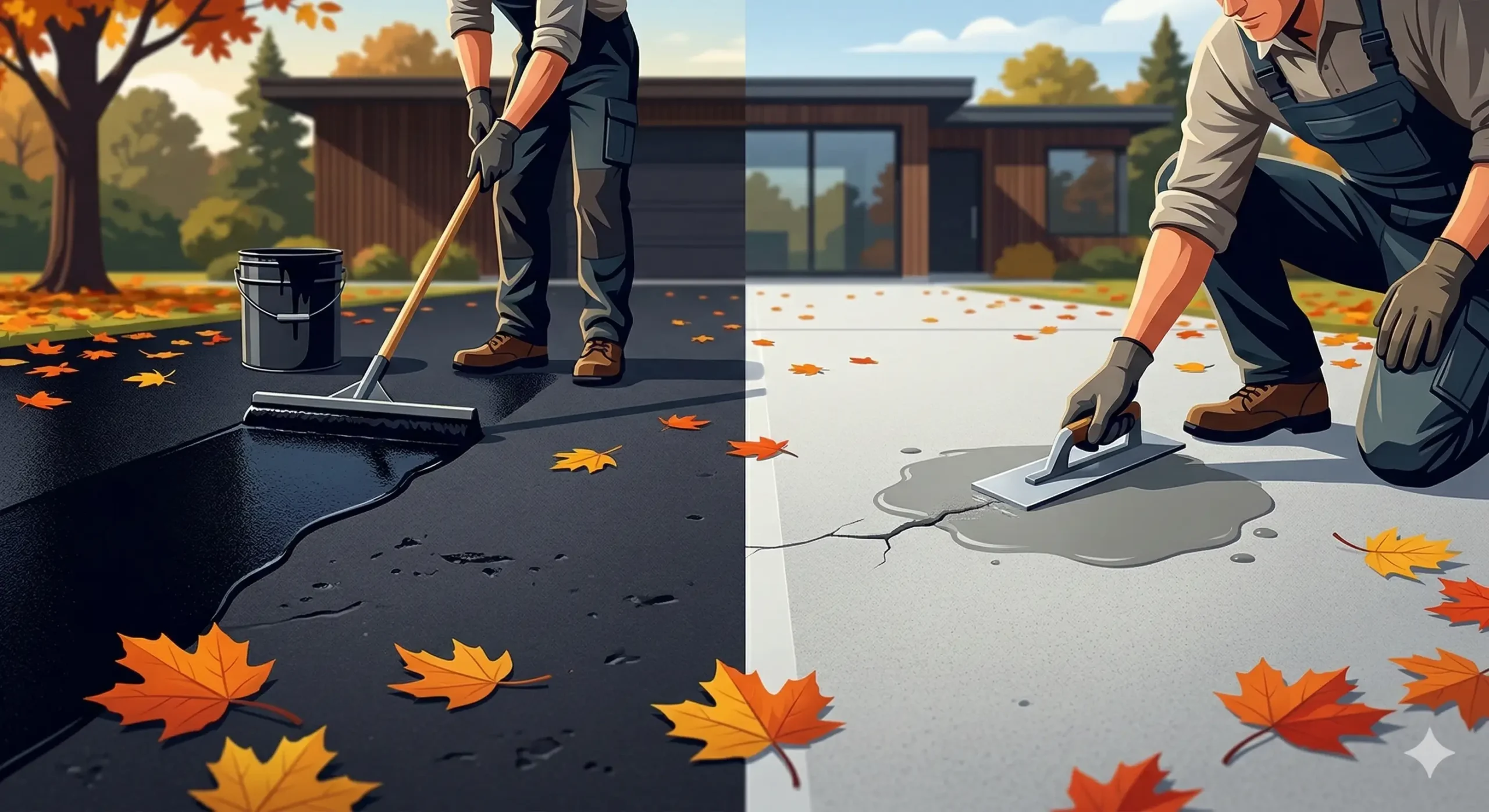
Concrete is prized for its longevity, often lasting 30 years or more. However, it is prone to cracking due to ground settling or root growth. Repairing concrete typically requires specialized materials to match the existing slab.
For minor cracks, you can expect to pay between $1 and $3 per linear foot for professional filling. If the damage is more extensive, such as large sunken sections, the costs will naturally scale upward.
Patching and Crack Filling
Small fissures can often be handled with high-grade epoxy or polyurethane fillers. Professionals charge roughly $200 to $500 for a standard visit that covers multiple small cracks across a two-car driveway.
Ignoring these small openings allows water to seep under the slab, which can lead to shifting. Think of crack filling as a small insurance policy against much larger structural failures later on.
Concrete Resurfacing and Mudjacking
If the surface looks worn but the structure is sound, resurfacing costs about $3 to $5 per square foot. This involve spreading a thin layer of new concrete over the old to give it a fresh, uniform appearance.
For sunken slabs, “mudjacking” or foam leveling is a popular fix. This process pumps material under the concrete to lift it back to its original height, usually costing between $500 and $1,500 per section.
Asphalt Driveway Repair Costs
Asphalt is a flexible material that handles freeze-thaw cycles well, but it requires more frequent maintenance than concrete. It is generally more affordable to repair in the short term.
Most asphalt repairs fall into three categories: crack sealing, pothole patching, and sealcoating. Keeping up with these can easily double the lifespan of your driveway.
Patching and Potholes
Patching a single pothole usually costs between $100 and $250. Professionals use a “hot patch” method where new asphalt is compacted into the hole, creating a durable bond with the surrounding surface.
For a series of small holes or cracks, a contractor might offer a bulk rate. For example, filling several shallow cracks across a standard driveway often stays within the $300 to $600 range.
Resurfacing and Sealcoating
Asphalt resurfacing, also known as an overlay, involves adding a new 1.5-inch layer of asphalt over the existing base. This costs roughly $2 to $3 per square foot and makes the driveway look brand new.
Sealcoating is the most common preventative task. It costs about $0.20 to $0.50 per square foot. Doing this every 3 to 5 years protects the asphalt from UV rays and oil spills that cause it to become brittle.
Comparing the Long-Term Value
While asphalt is cheaper to repair today, concrete often wins on long-term value because it requires fewer interventions. Asphalt is like a pair of high-quality boots that need regular polishing and resoling.
Concrete is more like a stone path; it stays put and looks great, but if a heavy rock cracks, it is a bit more difficult and expensive to swap out or blend perfectly.
| Repair Method | Concrete Est. Cost | Asphalt Est. Cost |
|---|---|---|
| Small Crack Fill | $150 – $400 | $100 – $300 |
| Patching/Potholes | $300 – $800 | $100 – $250 |
| Full Resurfacing | $3 – $7 per sq. ft. | $2 – $4 per sq. ft. |
Micro-Case Example: The Suburban Shift
A homeowner in Ohio noticed a two-inch drop in the concrete slab right where it met the garage floor. Instead of replacing the $4,000 driveway, they opted for poly-foam leveling.
The repair took only three hours and cost $900. By choosing a targeted repair over total replacement, they saved over $3,000 and were able to park their car on the driveway the very same day.
Factors That Influence Your Quote
Several variables can change your final bill. The location of your home is primary; contractors in metropolitan areas often have higher labor rates than those in rural settings.
The “prep work” required is another big factor. If a contractor has to spend hours cleaning out debris, removing oil stains, or cutting away tree roots, the labor cost will rise significantly.
Finally, the size of the job matters. Most professionals have a “minimum call-out fee” of $200 to $300. It is often more economical to wait until you have a few repairs needed rather than calling someone out for a single tiny crack.
When to Repair vs. Replace
As a general rule, if more than 25% of your driveway is covered in deep cracks or holes, replacement might be more cost-effective than continuous patching. Patching is a bridge, not a permanent cure.
If your driveway is over 20 years old and the base layer is crumbling, a new surface will likely fail within a year or two. In these cases, a full tear-out and replacement ensures a stable foundation.
Consider the “alligator cracking” pattern often seen in asphalt. If your driveway looks like the skin of a reptile, it usually means the foundation has failed, and no amount of top-sealer will fix the underlying issue.
Final Thoughts on Driveway Care
Repairing your driveway is a smart way to protect your home’s value and prevent minor issues from becoming major expenses. Whether you choose concrete or asphalt, consistency is your best friend.
By catching cracks early and staying on top of sealing, you can keep your driveway functional and attractive for decades. We hope this guide helps you move forward with your home repairs with confidence.
Would you like me to help you find a maintenance checklist to keep your specific driveway type in top shape?