Investing in Your Home’s First Impression
Replacing your home’s siding is a bit like buying a high-quality winter coat for your house. It needs to look sharp for the neighbors, but its primary job is to keep the elements out and the comfort in. In 2026, siding remains one of the most impactful ways to boost curb appeal and energy efficiency.
On average, U.S. homeowners spend between $6,000 and $17,000 on a siding replacement project. However, for larger homes or premium materials, that figure can easily climb north of $30,000. Understanding where those dollars go is the first step toward a successful renovation.
The total cost is a blend of material choice, the size of your exterior walls, and the complexity of your home’s architecture. A simple rectangular ranch will always be more affordable to side than a three-story Victorian with turrets and gables.
The Material Breakdown: Finding Your Fit
Your choice of material is the biggest lever you can pull to control the final price tag. It’s the difference between a standard cotton tee and a cashmere sweater—both cover you, but they perform and cost very differently.
Vinyl Siding
Vinyl remains the champion of affordability and low maintenance. Expect to pay between $3 and $12 per square foot installed. It’s a popular choice because it never needs painting and stands up well to moisture.
For a standard 2,000-square-foot home, vinyl usually lands in the $8,000 to $15,000 range. It’s an excellent option if you want a clean look without the headache of constant upkeep.
Fiber Cement (James Hardie)
Fiber cement is the “middle-of-the-road” luxury. It mimics the look of real wood but is fire-resistant and incredibly durable. Costs typically range from $6 to $15 per square foot installed.
While it requires more labor due to its weight, many homeowners find the investment worth it for the 30-plus year lifespan. Think of it as the “buy once, cry once” option for long-term peace of mind.
Wood and Engineered Wood
Natural wood siding is breathtaking but demanding. High-end cedar or redwood can cost $10 to $20 per square foot. It requires regular staining or painting to prevent rot, making it the highest-maintenance choice.
Engineered wood offers a happy medium, providing that organic aesthetic with much higher resistance to insects and moisture, often at a slightly lower price point than solid timber.
Labor and Hidden Costs
When you look at a quote, remember that materials usually only account for about 40% to 50% of the total. The rest goes toward the skilled hands doing the work. Removing old siding is a labor-intensive process that can add $1,000 to $3,000 to your bill.
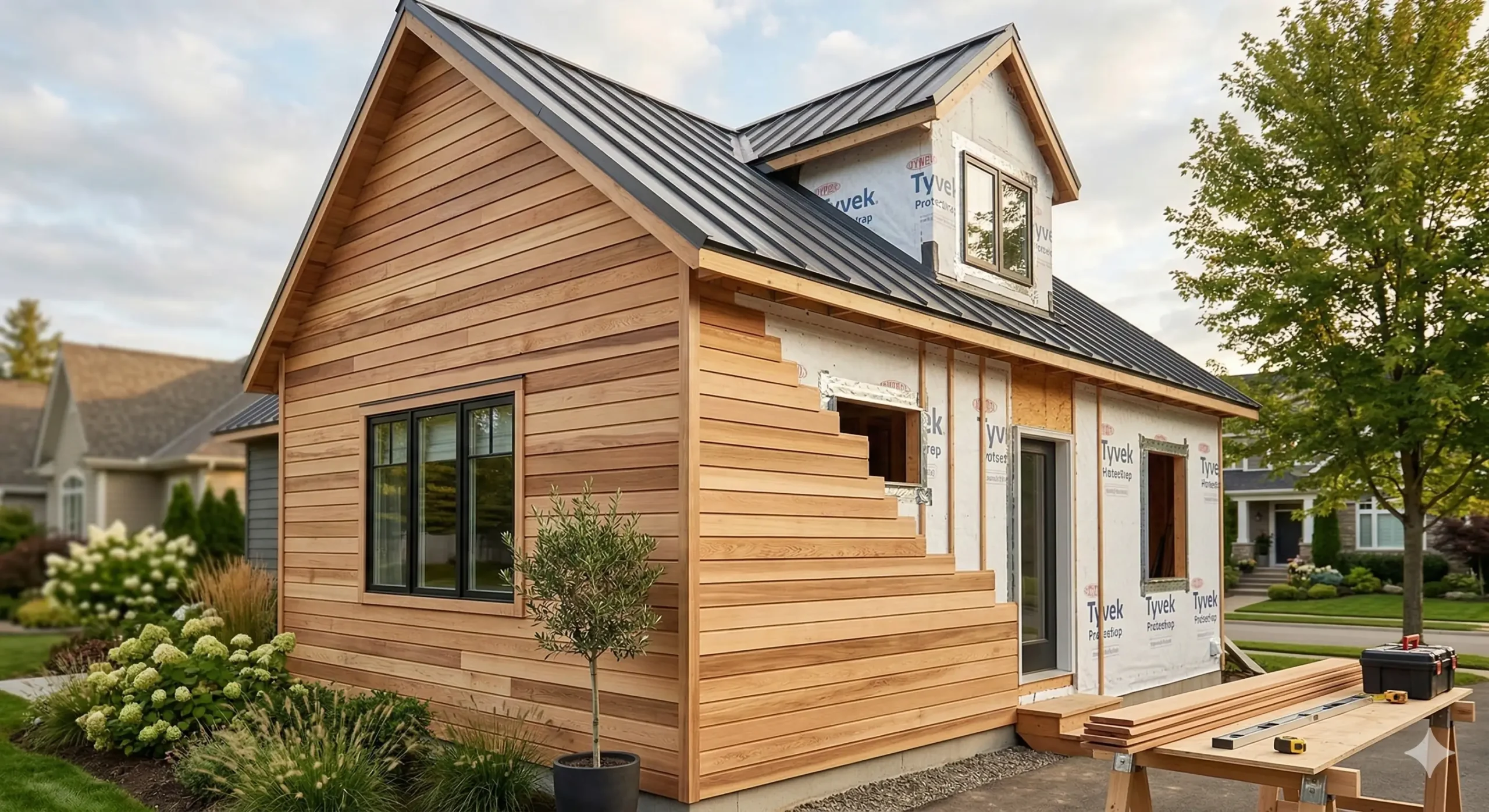
Don’t forget the “behind the scenes” components. House wrap, flashing, and trim are essential for waterproofing. If your contractor finds rot in the wooden sheathing underneath your old siding, expect a change order to fix the structural integrity before the new panels go up.
Siding Cost Comparison Table
| Material | Cost per Sq. Ft. (Installed) | Average Total (2,000 Sq. Ft. Home) |
|---|---|---|
| Vinyl | $4 – $11 | $8,000 – $22,000 |
| Fiber Cement | $7 – $16 | $14,000 – $32,000 |
| Engineered Wood | $6 – $13 | $12,000 – $26,000 |
| Brick Veneer | $12 – $25 | $24,000 – $50,000 |
Strategic Ways to Save
You don’t always have to choose the cheapest material to save money. Timing can be a powerful tool. Many contractors offer discounts during the “off-season” in late autumn or early winter when their schedules are lighter.
Another tip is to focus on the “front-facing” parts of the home. Some homeowners use premium stone or wood accents on the facade while using color-matched vinyl on the sides and back to balance the budget without sacrificing curb appeal.
Project Notes for Homeowners
- Check Your HOA: Many Homeowners Associations have strict rules on colors and materials. Always get approval before ordering.
- Verify the Warranty: Ensure your quote includes both the manufacturer’s warranty on the material and the contractor’s warranty on the labor.
- Energy Credits: In 2026, certain insulated siding options may qualify for federal energy-efficiency tax credits.
- Get Three Quotes: Prices vary wildly between companies. Comparing three itemized bids ensures you’re paying a fair market rate.
Final Thoughts
New siding is more than a cosmetic fix; it’s a protective shield. While the initial cost can feel daunting, the increase in home value and the decrease in monthly energy bills often make it one of the smartest investments a homeowner can make.
Take your time choosing a contractor who communicates clearly and respects your budget. A well-installed exterior will keep your home beautiful and bone-dry for decades to come.