Getting a Handle on Your New Roof’s Price Tag
Replacing a roof is one of the most substantial home improvements you might ever tackle. It’s also one that comes with a lot of questions, especially regarding the final bill.
Understanding exactly what you’re paying for can clear up some of that confusion. We’re going to break down the costs in a straightforward, helpful way.
The price of an asphalt shingle roof can vary significantly based on a few key factors. It’s rarely a one-size-fits-all figure, and that’s perfectly normal.
By the time we finish, you’ll feel confident in assessing quotes and discussing options with potential contractors. Let’s get to it.
The Core Components: Materials and Labor
Let’s look at the two biggest chunks of your investment first. These are the foundation of any roofing estimate and the hardest to reduce significantly.
When we say “materials,” we’re not just talking about the shingles you see. It also includes the underlayment, flashing, ventilation, and fasteners that make the system work.
Think of it like building a sturdy desk. You have the wood top (the shingles), but you also need screws, legs, and a stable frame (the underlayment and other parts) for it to function correctly.
Labor, meanwhile, covers the cost of hiring skilled workers to safely remove your old roof and expertly install the new one. This often accounts for around half of your total project cost.
Materials Breakdown
Materials are often priced by “the square,” a standard roofing unit. One square is equal to 100 square feet, and a typical roof might need 25-30 squares.
Asphalt shingles themselves come in a few common tiers, which will significantly affect your final price.
- Traditional 3-Tab Shingles: These are the most budget-friendly, lay flat, and are recognizable by their uniform tab shapes. While affordable, they usually don’t last as long as other types.
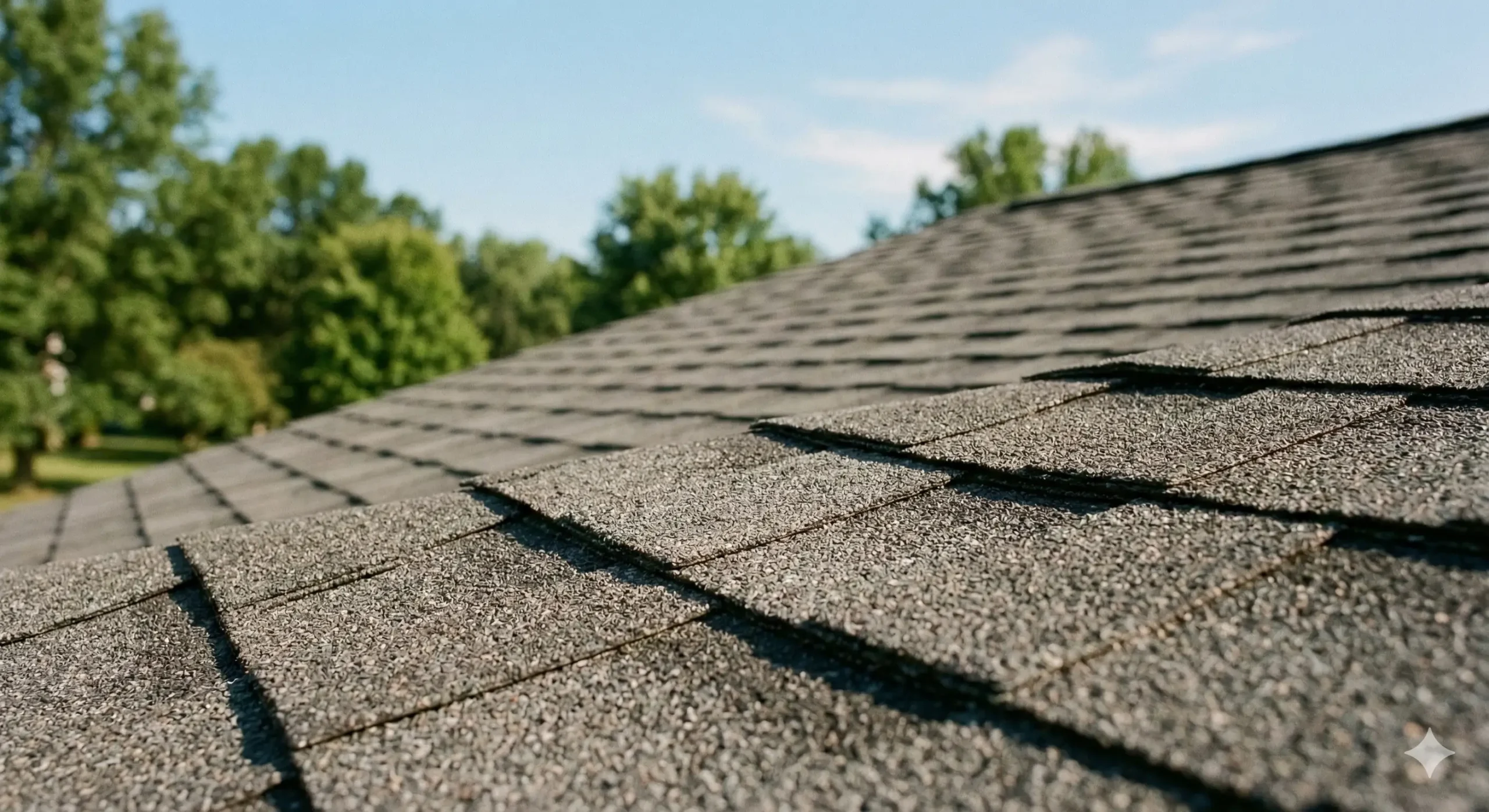
- Architectural Shingles: Also called dimensional shingles, these are much thicker and more multi-layered, giving a textured look. They are very popular for their durability and can add a lot of curb appeal.
- Luxury or Premium Shingles: These are high-performance shingles designed to look like more expensive materials, like wood shake or slate, but with the benefits of modern asphalt. They offer a distinct, upscale style but come at a significant premium.
Each type offers a different blend of cost, durability, and aesthetics. Your choice here is a major lever in your project’s final cost.
Labor’s Big Impact
As we mentioned, labor is a huge part of your roof’s price, and for good reason. A roof replacement is demanding and requires real expertise.
Removing the old materials (tear-off) is hard work that must be done with care to protect your property and ensure a clean starting point for the new installation.
Installing the new roof correctly, with precise flashing and ventilation, is critical for long-term performance. It’s not something to rush or cut corners on.
Labor costs can also shift depending on how busy the local roofing market is or the overall cost of living in your area.
The Key Factors that Drive Costs Up or Down
Beyond materials and labor, several other factors can significantly impact your roof’s final price. Let’s explore those.
It’s important to understand these variables so you can get a better sense of why one quote might be higher or lower than another.
1. Your Roof’s Unique Size and Slope
Your roof’s total area is the single biggest determinant of how much material and labor your project will require. A 2,500 square foot home will always cost less to roof than a 5,000 square foot home.
Just as a large driveway needs more asphalt than a small one, a larger roof needs more shingles, underlayment, and work hours.
The pitch (slope) of your roof is also a factor. A very steep roof is harder and more dangerous to work on, requiring special equipment and more time, which will increase labor costs.
2. Complexity of the Installation
A simple, rectangular roof with two straightforward slopes is easy and efficient to replace. Complexity, however, adds time and materials.
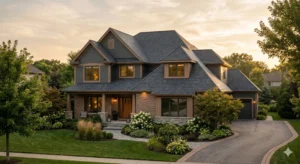
Multiple valleys, dormers, chimneys, and intersecting rooflines require more skill, extra cuts, and careful flashing to ensure a watertight seal.
For instance, think of it like painting a simple room versus a room with detailed trim and ornate crown molding. The trim work simply takes much longer.
3. The “Tear-Off” and Disposal
Removing your old roof (the tear-off) is essential for a clean installation, but it’s a big part of the job. It involves hard labor and the cost of proper waste disposal.
Sometimes you might be given the option of a ” roof-over, ” which involves installing new shingles directly over the old ones. This can save money in the short term, but it’s rarely recommended.
We can illustrate this in a simple micro-case. Imagine an old kitchen counter. You can try to put new tile over it, but the new counter won’t be level, and the old material may hide serious rot and water damage below.
A full tear-off allows your contractor to inspect the roof deck, the structural base of your roof, and make any necessary repairs, which leads us to our next point.
4. Necessary Roof Deck Repairs
Your roofing contractor won’t know for sure what condition your roof deck is in until the old shingles are removed.
They may find wood that is soft, water-stained, or even rotted. This rotted plywood must be replaced, and that comes with extra costs.
This is one area where it’s very wise to build a ” just in case ” buffer into your budget, as discovering deck damage is more common than you might think.
5. The Value of Ventilation and Flashing
Don’t overlook your roof’s peripheral components. A proper ventilation system keeps your attic’s temperature balanced, preventing moisture buildup and extending your roof’s life.
Flashing is the metal used around chimneys, vents, and valleys to keep water from seeping in. It’s small but critically important for your roof’s integrity.
Getting new flashing and ensuring excellent ventilation are non-negotiable for a truly robust and long-lasting new roof.
Understanding the Price You See
Now that we’ve dissected the main costs and influential factors, we can provide some very general estimates.
Keep in mind that these can only be broad ranges, as every home and project is unique.
- Budget Roof: A simple, small roof using 3-tab shingles, maybe in an area with lower labor costs, could cost between $4,000 and $7,000.
- Standard Roof: A mid-sized home with some complexity, using popular architectural shingles and in a typical market, might be in the $8,000 to $12,000 range.
- Premium Roof: A large, complex roof, using high-end shingles with full deck replacements and other premium features, could easily go from $13,000 to over $20,000.
We share these figures not to set a specific price in your mind, but to give you a clear illustration of the wide cost spectrum you may encounter.
Building a Budget and Hiring with Confidence
We’ve covered a lot of ground, from the essential ingredients of materials and labor to the numerous factors that add complexity and cost.
Our main goal has been to provide the transparency and knowledge you need to approach this major investment with clarity.
You are now better equipped to understand the numbers on a quote and discuss the nuances of your home’s roof with different contractors.
By having this foundational knowledge, you can ensure that you’re not just buying a new roof, but investing in your home’s long-term protection with peace of mind.