Understanding House Settling and Foundation Movement
Every house undergoes some degree of settling as the soil beneath it adjusts to the weight of the structure. While minor shifting is normal, significant movement can lead to structural instability and expensive repairs.
At myguideline.store, we believe early detection is the key to saving money. Identifying the difference between a natural ‘settle’ and a serious foundation failure can be the difference between a $500 fix and a $20,000 renovation.
Common signs of settling include cracks in drywall, doors that no longer latch correctly, and sloping floors. For example, if you notice a staircase-shaped crack in your exterior brickwork, your foundation may be dropping in one corner.
Average Costs for Common Foundation Repairs
The price of fixing a settling house varies wildly based on the underlying cause and the required method of stabilization. Most homeowners spend between $2,000 and $8,000 on average repairs.
However, if the entire foundation needs to be reinforced with deep-seated piers, costs can quickly climb. It is not uncommon for complex residential projects to reach $15,000 or more depending on the soil composition.
| Repair Type | Estimated Cost | Primary Purpose |
|---|---|---|
| Crack Injection | $400 – $800 | Sealing minor leaks and fissures |
| Mudjacking | $600 – $2,500 | Lifting sunken concrete slabs |
| Piering (per pier) | $1,000 – $3,000 | Stabilizing deep foundation layers |
The Variables That Drive Repair Prices
The primary driver of cost is the number of piers or supports needed to level the home. A small cottage might only need three piers, while a sprawling ranch-style home could require twenty or more.
Soil type also plays a massive role in the final bill. Expansive clay soils, which swell when wet and shrink when dry, often require more robust and deeper solutions than stable, sandy environments.
Accessibility is the final major variable. If a repair crew can easily reach the foundation with heavy machinery, the labor cost remains lower than if they must manually excavate under a porch or deck.
Micro-Case Example: The Corner Sag
Consider a homeowner in a suburban area who noticed a gap opening between the chimney and the siding. A structural engineer diagnosed a localized settlement issue in the north corner of the house.
By installing three steel push piers to reach stable bedrock, the contractor stabilized the chimney for roughly $4,500. Had the owner waited another year, the leaning chimney might have collapsed, tripled the repair cost.
Professional Inspection and Engineering Fees
Before any work begins, it is wise to hire a structural engineer who does not work for a repair company. This ensures you get an unbiased assessment of what truly needs fixing.
An independent engineering report typically costs between $500 and $1,200. While this feels like an extra expense, it prevents you from paying for unnecessary ‘upgrades’ suggested by aggressive sales teams.
Think of this as a medical second opinion. For instance, an engineer might find that your cracks are merely cosmetic, saving you thousands on structural work you didn’t actually need.
Advanced Methods: Piering vs. Mudjacking
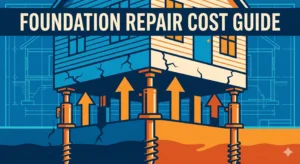
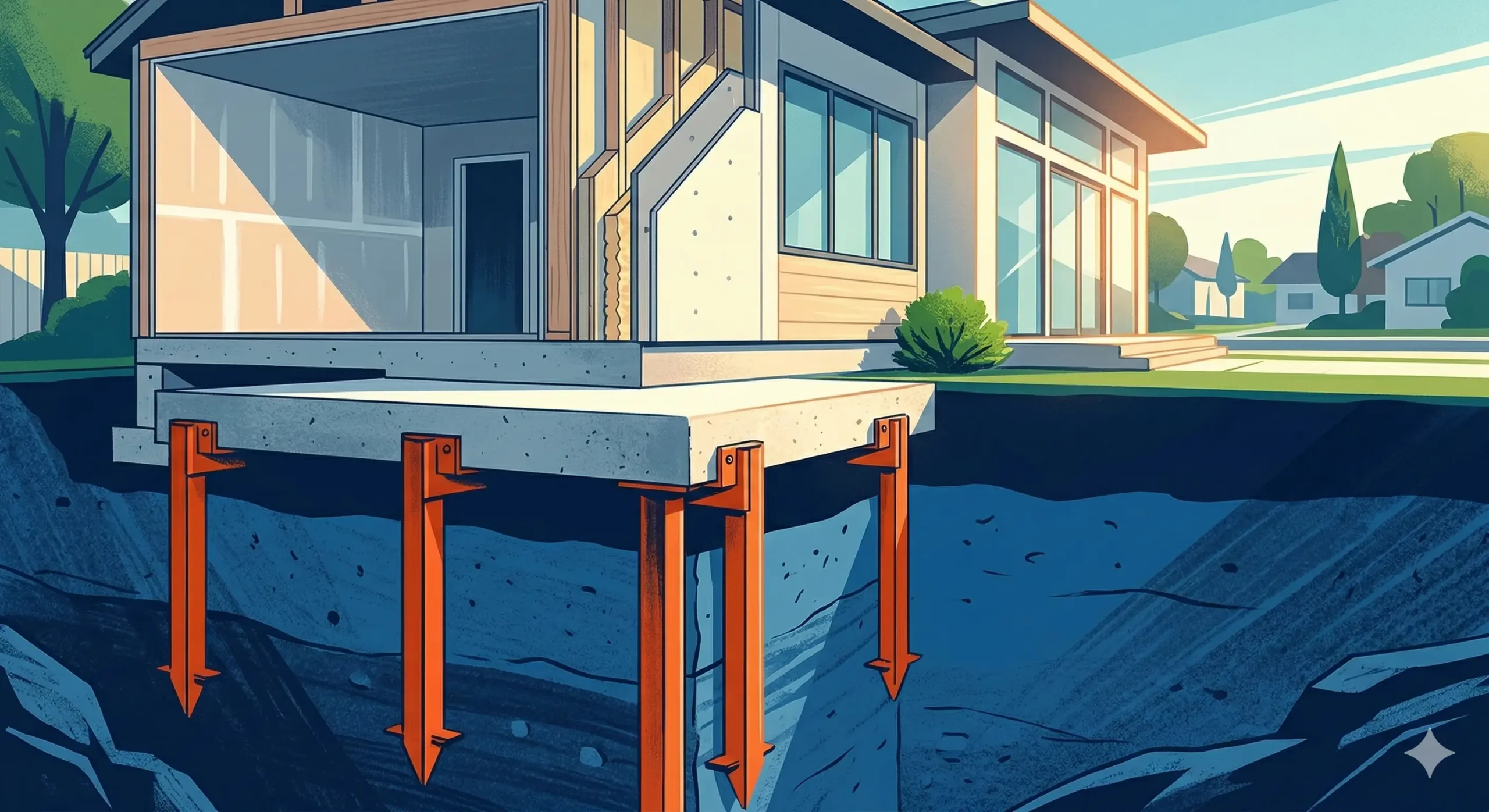
Piering involves driving steel or concrete pilings deep into the earth until they hit a load-bearing strata. This is the gold standard for fixing a settling house because it provides permanent support.
Mudjacking, or slab leveling, is a more affordable alternative used for porches, driveways, or garage floors. A slurry of cement and sand is pumped under the concrete to ‘float’ it back into place.
While mudjacking is cost-effective, it is rarely a solution for the actual weight-bearing walls of your home. Using mudjacking for a structural foundation is often a temporary band-aid that leads to future settling.
Tips for Budgeting for Foundation Work
- Always get at least three quotes from licensed and insured foundation specialists.
- Check for transferable warranties, which add significant value if you decide to sell your home later.
- Ask if the price includes ‘cosmetic restoration’ like patching the drywall cracks after the lift.
- Check your local building department for permit fees, as these are often excluded from initial quotes.
Hidden Costs You Might Encounter
When a house is lifted back to its original position, other things can break. The most common hidden cost is plumbing damage, as pipes that have adjusted to the ‘sag’ may snap during a lift.
Landscaping restoration is another frequently overlooked expense. Excavating around your foundation will likely destroy bushes, flower beds, or sections of your lawn that will need replanting.
Finally, interior cosmetic repairs are almost guaranteed. While the foundation is now level, the cracks in your plaster or drywall will need professional taping, sanding, and painting to look new again.
Notes on Prevention and Maintenance
Proper drainage is the best way to prevent future settling costs. Ensure your gutters are clean and that downspouts discharge water at least five feet away from the foundation wall.
Maintain consistent moisture levels in the soil around your home during drought periods. Using a soaker hose can prevent the soil from shrinking and pulling away from the foundation footings.
Final Thoughts on Structural Integrity
Fixing house settling issues is undeniably a significant financial commitment, but it is an investment in your home’s longevity. Ignoring the problem only allows the damage to compound and the costs to rise.
By understanding the different repair methods and consulting with unbiased experts, you can navigate this process with minimal stress. A stable home provides peace of mind that no cosmetic renovation can match.
Would you like me to help you draft a checklist for interviewing foundation repair contractors?